
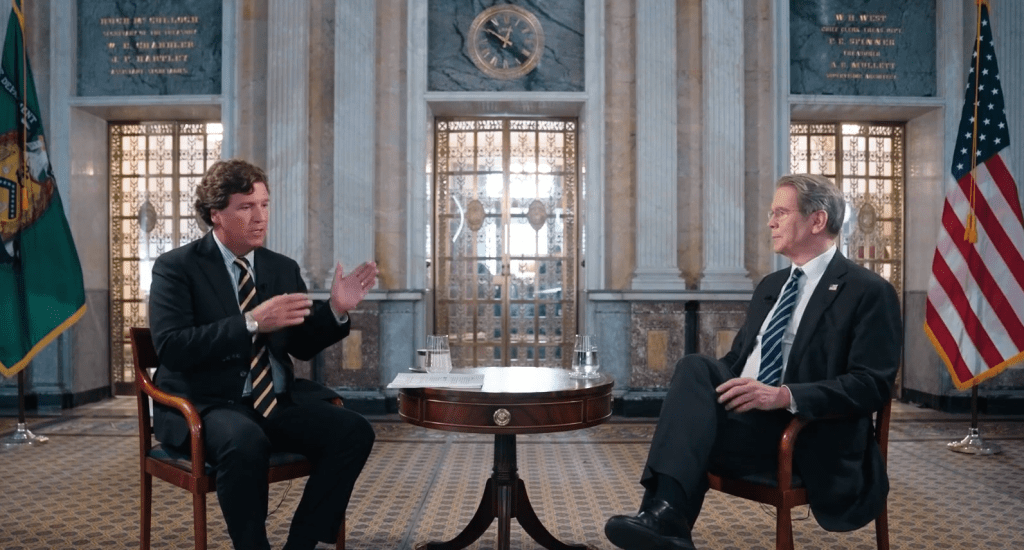
In a recent interview with Tucker Carlson, Treasury Secretary Scott Bessent—a former Wall Street bond seller—offered a sharp and unapologetic defense of President Trump’s tariff strategy. Far from being a tax on Americans, Bessent described tariffs as a smart, strategic tool to protect American workers and restore the nation’s economic independence.
He pushed back on the popular media narrative that paints tariffs as harmful, especially the claim that they raise prices for consumers. Instead, Bessent argued, tariffs have been used effectively to combat unfair trade practices, particularly those coming from China, and to rebalance decades of bad trade deals that hollowed out American manufacturing and pushed us into a reliance on foreign supply chains.
Free Trade’s False Promise
For years, free trade agreements have benefited multinational corporations and foreign competitors at the expense of American workers. These deals made the U.S. dangerously reliant on adversarial nations for critical goods, weakening our economy and national security in the process.
Trump’s tariffs, Bessent says, were a bold correction. They aimed to bring jobs back home, rebuild domestic industry, and put America first in trade negotiations.
The Inequality No One Talks About
One of the most striking points Bessent made was about wealth concentration in the U.S. stock market. Today, 88% of equities are held by the top 10% of Americans. The next 40% owns the rest. The bottom half? They own nothing—and often carry significant debt.
These Americans didn’t benefit from the trillions in market cap added by the so-called “Magnificent 7” tech stocks. They don’t live and die by market swings. In fact, they might be far more open to seeing tariffs play out because they’ve got nothing to lose and everything to gain from a stronger manufacturing base and better job prospects.
“It’s Main Street’s Turn”
Perhaps the most profound statement from Bessent was this:
“Wall Street’s done great. It can continue doing well. But it’s Main Street’s turn.”
This one line perfectly captures the administration’s goal. Tariffs aren’t about punishing global trade—they’re about leveling the playing field for American workers and companies. By placing checks on offshoring, tariffs discourage corporations from developing talent in the U.S. only to chase cheap labor abroad when margins get tight.
For towns like Gary, Indiana, or Flint, Michigan—once proud industrial centers now struggling—tariffs offer a shot at revival. These communities know better than any economist in a New York studio that global trade hasn’t worked for everyone. With the right policies, they could again become hubs of American-made excellence.
The Critics Miss the Bigger Picture
Most criticism, especially from outlets like CNBC, focuses on short-term losses in the stock market—paper wealth slipping away. But the stock market isn’t the real economy. And for far too long, national policy has favored stock prices over stable jobs and resilient supply chains.
Critics of Bessent and Trump’s tariff agenda aren’t thinking about the long game—they’re protecting corporate profits, not American prosperity.
A Necessary Course Correction
Scott Bessent is right. Trump’s tariff policy is more than just a reaction to global trade imbalances—it’s a course correction after 40 years of policies that enriched the coasts and Wall Street while leaving Middle America behind.
This administration is finally willing to make bold changes. Tariffs are just the beginning. And if we get this right, the rewards won’t just be in dollars—they’ll be in restored dignity, stronger communities, and a sovereign America that builds things again.
 Main St. Economics
Leave a comment